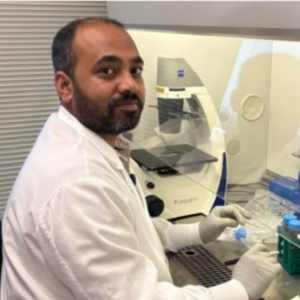
Most type 1 diabetes (T1D) research focuses on the role of beta cells in regulating blood glucose levels. However, insulin also acts as an important growth and energy signal for many tissues throughout the body. Due to this broader role, it makes sense that insulin secretion can be influenced by more than just glucose alone. Max Shin is studying how amino acids, which come from proteins in our diet, can also activate human beta cells. He found that certain amino acids can elicit strong responses in beta cells even when glucose levels are relatively low. His preliminary findings suggest that human beta cells may use additional nutrient-sensing pathways that are less prominent in animal models commonly used in diabetes research.
The goal of Max’s project is to determine how these amino acids activate human beta cells and contribute to insulin secretion. He is investigating which amino acids have the greatest effects and mapping the molecular pathways that link nutrient sensing to insulin release. To do this, Max uses a live-cell imaging approaches that allow him to monitor changes in metabolic activity within individual beta cells as they are exposed to different nutrient conditions. These experiments will provide insight into the cellular processes that regulate insulin secretion in response to mixed nutrients, as occurs naturally after meals.
This work is important to T1D research and development for future therapies. One of the most promising strategies to cure T1D is creating stem cell–derived beta cells for transplantation. It is essential to better understand how human beta cells respond to a broad range of nutrients, not only glucose. Defining these nutrient responses in healthy human beta cells and how they are perturbed in disease will provide a more complete framework for evaluating and optimizing stem cell–derived beta cells and will inform new strategies to support a cure for T1D.