Type 1 diabetes (T1D) is a lifelong autoimmune disease that affects millions of people worldwide. It develops when the immune system mistakenly attacks the insulin-producing beta cells in the pancreas, leaving the body unable to regulate blood sugar on its own. Although advances in technology and insulin therapy have improved diabetes management, there is still no cure, and living with T1D requires constant attention every day. That is why supporting innovative research is so important.
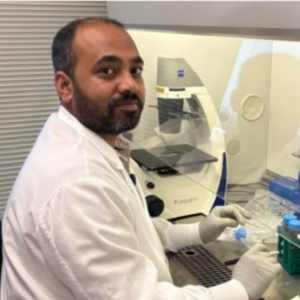
At Diabetes Research Connection, we are proud to fund early career scientists whose groundbreaking work brings us closer to better treatments and, ultimately, a cure. In this Researcher Spotlight, we are excited to introduce one of the dedicated investigators leading the way.
The pancreas contains several specialized cell types that play essential roles in regulating metabolism. Among these cells are beta cells, which sense glucose and produce insulin. These are the cells that are lost in Type 1 Diabetes. Other cells types in the pancreas include alpha cells and gamma cells. These cells are also specialized and have a unique role. Alpha cells are responsible for producing glucagon, the hormone that is important for increasing blood glucose levels when they are too low. However, some research has shown that in cases of severe metabolic stress, alpha cells can produce insulin.
Unlocking the Potential of Alpha Cells
These findings inspired Dr. Mark Andrade to investigate whether it is possible to unlock the insulin-producing potential of pancreatic alpha cells. Building on previous work from his laboratory, Dr. Andrade identified a protein called αE-catenin that may act as a molecular "lock," preventing alpha cells from taking on the functions of beta cells.
To test his hypothesis, Dr. Andrade used a mouse model in which the αE-catenin protein was removed specifically from alpha cells. He then induced diabetes by selectively depleting the mice's beta cells. Remarkably, diabetic mice lacking αE-catenin in their alpha cells maintained significantly better blood glucose control than diabetic mice with normal alpha cells. Even more surprising, when these mice were challenged with glucose, they were able to produce insulin despite having no beta cells. Dr. Andrade's next step is to better understand the mechanisms that allow alpha cells to transform and produce both insulin and glucagon when αE-catenin is removed.
A Promising Path Forward
These exciting findings suggest that αE-catenin could be a promising therapeutic target for unlocking the insulin-producing potential of alpha cells. By revealing a possible way to regenerate insulin-producing cells from within the pancreas itself, this research lays the groundwork for a regenerative approach that could one day transform the treatment of Type 1 diabetes.
DRC donors fund paradigm-shifting research
Innovative projects from early-career scientists, like Dr. Andrade, often struggle to secure traditional funding. Yet it’s these early investigations that spark pathways for new treatments.
Thanks to donor support, DRC provides researchers with the essential funding to pursue these game-changing ideas from day one.
How you can help:
Donate to DRC to support this research and other high-potential projects
Share this blog to raise awareness about this innovative project
Subscribe to our newsletter for updates on this and other research breakthroughs
Together, we can accelerate the research that will lead to better treatments and, ultimately, a future free from the constant burden, fear, and complications of type 1 diabetes.