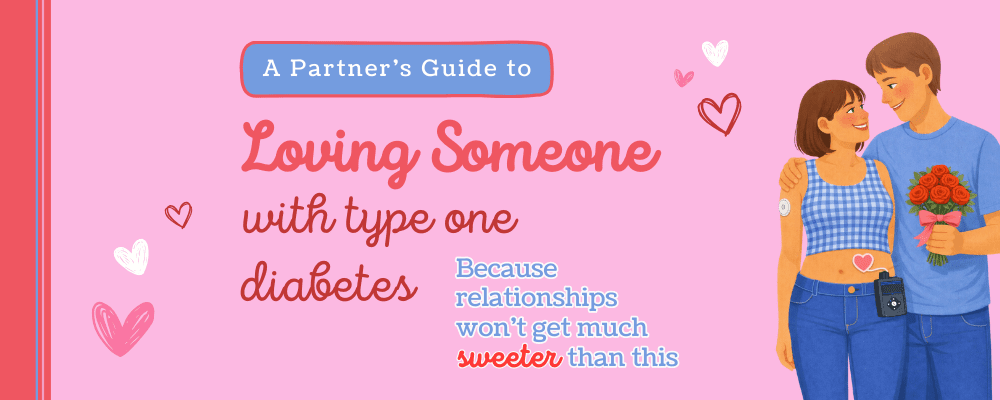
Loving someone with Type 1 diabetes means loving them in a world that often asks them to carry more than anyone can see.
It means sharing life with a condition that doesn’t clock out, doesn’t take weekends off, and doesn’t disappear when things feel calm. And while you don’t need to become an expert overnight, choosing to learn their diabetes is one of the most meaningful ways to show up as a partner.
This guide was created to help you understand the daily realities of Type 1 diabetes (T1D), reduce the invisible mental load your partner carries, and build a relationship rooted in safety, trust, and shared effort.
Because partnership matters — especially here.
Click here to jump to the printable pdf version of this guide.
Love Starts With Learning
Type 1 diabetes is an autoimmune disease. The immune system mistakenly attacks the pancreatic cells that produce insulin, meaning the body can no longer regulate blood sugar on its own.
What that means in real life is this:
Your partner manually does the work of a pancreas every single day.
They’re constantly checking blood sugar, delivering insulin, and adjusting for food, activity, stress, illness, sleep, hormones, and more — often dozens of times a day. Even on “good days,” there’s a quiet layer of tracking, timing, calculating, and responding happening beneath the surface.
T1D is managed in the background of everything — because it has to be. It’s a life-threatening condition that requires 24/7 awareness.
When you take the time to understand that reality, something powerful happens. You remove the constant need for explanation. You make room for ease. And you help create a relationship where your partner doesn’t feel like they’re managing this alone.

Why a Partner’s Understanding Matters
Learning your partner’s diabetes isn’t about control or responsibility — it’s about presence.
When a partner understands T1D, it can:
- Improve safety during blood sugar highs and lows
- Ease the emotional burden of always having to explain or justify decisions
- Make support feel calm, natural, and steady
- Alleviate the quiet loneliness that comes from not feeling understood
Support doesn’t need to be loud to be powerful. Often, it’s the quiet consistency that changes everything.
Learn Their Diabetes
Every person with Type 1 diabetes experiences it differently. The most meaningful learning happens together.
Ask your partner about:
- What their insulin pump or CGM does
- What highs and lows actually feel like in their body
- What alarms mean — and which ones matter most
- What daily care really involves
- What support feels helpful versus overwhelming
Comfort levels with involvement vary, and that’s okay. The goal isn’t perfection — it’s curiosity, respect, and communication.
Pop the Questions (You Don’t Need All the Answers)
Sometimes support starts with asking — and listening.
Here are a few questions that can open deeper understanding:
- What does living with Type 1 feel like for you day to day?
- What kind of support feels most helpful right now?
- What helps you most when you’re low or high?
- Would you like help, or is it better if I just stay close?
- How has diabetes changed the way you see yourself?
- What’s been the hardest part of this for you?
- Is there anything that doesn’t feel helpful — even if it’s well-intended?
These conversations build trust. They say, I care enough to understand.
Knowing the Signs: Highs and Lows
Understanding what blood sugar changes can look like — and how to respond — can make a real difference.
Low Blood Sugar (Hypoglycemia)
Common signs may include shakiness, sweating or clamminess, irritability, hunger, confusion, dizziness, slurred speech, or a fast heartbeat.
How you can help:
- Stay calm
- Bring fast-acting sugar (juice, glucose tabs, candy)
- Sit with them until they stabilize
High Blood Sugar (Hyperglycemia)
Signs can include extreme thirst, frequent urination, fatigue, blurry vision, nausea, or fruity-smelling breath (a possible sign of DKA).
How you can help:
- Help with small tasks while they rest
- Offer water
- Give space if needed
T1D Love Languages
Just like any relationship, support shows up in different ways.
Words of Affirmation
Diabetes can make people feel like a burden. Your words can counter that.
- “I know this isn’t easy. I’m proud of how you handle it.”
- “You don’t need to apologize. I accept all of you.”
- “Nothing about this makes me love you less.”
Acts of Service
You don’t have to fix diabetes — willingness to learn is enough.
- Carry snacks or sugar for lows
- Help with tasks when blood sugar is off
- Gently shut down myths, jokes, or misinformation
Quality Time
Blood sugar crashes and alarms can disrupt plans.
- Sit together through rough moments
- Be flexible when plans change
- Show that adapting isn’t a burden — it’s commitment
Physical Touch
Gentle, reassuring touch can communicate safety when words aren’t needed.
- A hug during a rough high
- Holding hands during appointments
- Quiet closeness after an exhausting day
Thoughtful Gifts
Small gestures show attention and care.
- Or a donation to a Type 1 diabetes research organization in their name
- A stylish bag for supplies
- Accessories that make devices easier to live with
Team Up on Everyday Life
Type 1 diabetes touches nearly every part of daily life. When you approach it as a team, the load becomes lighter.
This can include:
- Adjusting routines around food, exercise, and sleep
- Supporting safe driving habits
- Helping during illness or burnout
- Staying flexible during travel and social situations
- Being mindful of emotional stress and mental fatigue
- Respecting body confidence, intimacy, and device boundaries
It’s not about doing everything — it’s about doing it together.
Reading Between the Lines
Sometimes what your partner says isn’t the full story.
- “I don’t want to ruin the moment” may mean I’m minimizing what I need to protect our experience.
- “I hate needing help” may mean this feels vulnerable, even if I appreciate you.
- “I’m scared you’ll get tired of this” often reflects fear about the long-term weight of the disease.
- “It’s not you — it’s my blood sugar” is often exactly that.
- “I’m just a little off today” may mean managing this nonstop is exhausting.
Listening with compassion matters more than fixing.
To the People Who Love Someone With Type 1 Diabetes
There’s something powerful about someone who truly gets it.
Someone who doesn’t need everything explained to care.
Someone who accepts diabetes as part of the person they love.
Someone who chooses to learn — not because they have to, but because they don’t want their partner carrying this alone.
In a world that often overlooks the invisible demands of Type 1 diabetes, your presence matters. The safety, comfort, and understanding you bring can reshape how your partner experiences this disease — and the life they’re building beyond it.
That kind of support is just as vital as any medical treatment.
Want to learn more or support life-changing Type 1 diabetes research?
At Diabetes Research Connection, we fund early-career scientists working on innovative approaches to prevent, treat, and ultimately cure Type 1 diabetes.
Keep up to date with our latest helpful T1D lifestyle guides and research updates by signing up for our newsletter.