

 Close
Close
Your ultimate (and actually helpful) guide
So… your friend has Type 1 diabetes. Congrats! 🎉 You’ve officially unlocked your honorary title as a T1D Bestie.
Don’t worry—there’s no medical exam, no insulin math pop quiz, and no expectation that you suddenly become an endocrinologist. What is required? Empathy, snacks, curiosity, and a little education.
This guide is your cheat sheet to being the best kind of friend—the kind who just gets it.
Click here to jump to the printable versions of this guide.
Learn the basics (not the stereotypes)
Let’s start with the big one: Type 1 diabetes is not caused by sugar or lifestyle choices.
T1D is an autoimmune condition. Our immune system mistakenly attacked the beta cells in the pancreas that produce insulin. That means we now have to do that job ourselves, 24/7, for the rest of our lives.
That includes:
- Counting carbohydrates
- Dosing insulin
- Checking blood sugar
- Treating highs and lows
- Adjusting for sleep, stress, illness, activity, hormones… everything
What we eat, how we move, how we sleep, and how stressed we are all affect blood sugar—and no two diabetics manage it the same way.
The best thing you can do? Ask questions.
Pro tip: Ask me!
- “How does your pump work?”
- “What does low blood sugar feel like?”
We know it’s complicated. When you care enough to learn our version of it, we feel safer, more supported, and less alone.
Respect our devices
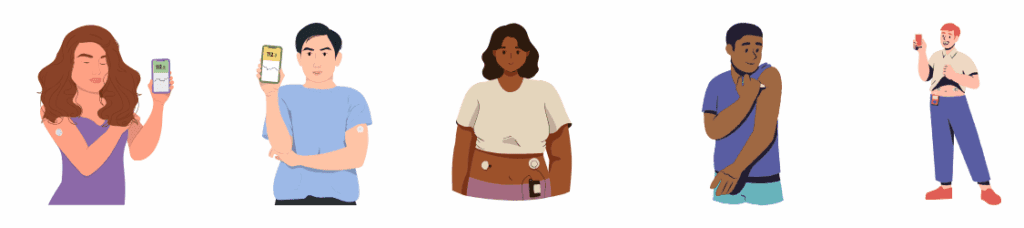
Insulin pumps and CGMs (continuous glucose monitors) aren’t gadgets. They are external organs—medical devices that literally keep us alive.
Please, do not touch them.
They beep, buzz, bruise, leave marks, and sometimes get in the way… but they also give us a life that used to be impossible. They are sacred in a way—the most vulnerable part of us because they control our health.
Pro tip: If you’re curious, try…
“I’ve always wondered what that does—if you feel like explaining, I’d love to learn.”
Curiosity is welcome. Grabbing our device is not.
Snacks can save our lives
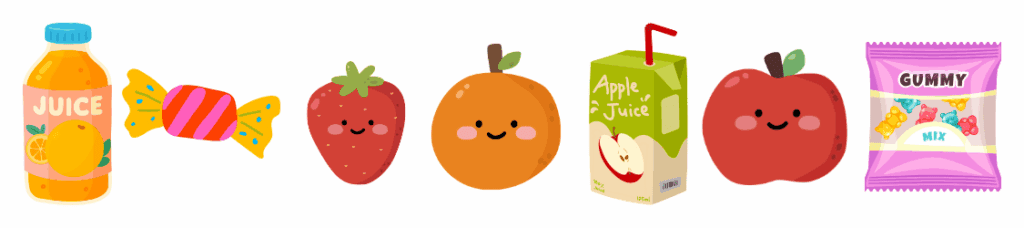
A juice box, fruit snacks, or glucose tabs may not look like medicine—but they are.
When our blood sugar drops, sugar is what keeps us conscious.
If you notice something feels off, offering help matters more than you might realize. Saying something like, “Want me to grab you a juice?” can be incredibly kind.
In low blood sugar situations, we may not have the energy or clarity to advocate for ourselves. If we ask for help, we truly need it.
Know the signs
Recognizing the symptoms of blood sugar highs and lows can help you support us when it matters most.
Signs of low blood sugar:
- Shaking
- Fast heart rate
- Mood changes
- Sweating
- Confusion
- Dizziness
- Weakness
- Pale skin
Signs of high blood sugar:
- Frequent bathroom trips
- Irritability
- Blurry vision
- Sluggishness
- Thirst
- Red or flushed skin
- Headaches
You don’t need to diagnose—just noticing and checking in can make a huge difference.
Learn our lingo
Diabetes comes with a second language, and we sometimes forget how confusing it can sound from the outside. Using these terms helps us feel understood and less alone.
- Low: I need sugar—fast
- High: I have too much sugar and need insulin
- Pump: The device that gives me insulin
- CGM: Continuous glucose monitor that tracks blood sugar 24/7
- Site: Where the pump connects to my body
- Basal: Background insulin (a steady drip)
- Bolus: Insulin dose for food or corrections
- Blood glucose: My blood sugar level right now
- Correction: Insulin to bring a high down
- In range: Generally 80–170 (this can vary)
You don’t have to memorize everything—but effort goes a long way.
Click here for our guide to the more advanced T1D research terminology.
Most importantly… support us
Being a T1D bestie isn’t about perfection. It’s about showing up.
1. Acknowledge our wins
We celebrate things like stable blood sugar days, remembering to change a site, or refilling insulin on time. These “small” victories are huge. Celebrate with us—it matters more than you know.
2. Be there on tough days
Some days burnout hits hard. Some days numbers won’t cooperate no matter what we do. We may feel awful or frustrated for reasons we can’t control. Patience, gentleness, and presence mean everything.
3. Advocate and educate
When someone jokes, “This will give me diabetes,” or misunderstands what Type 1 actually is, your voice helps remind the world that our experience matters.
Try saying:
“Type 1 diabetes isn’t caused by diet—it’s an autoimmune condition.”
When awareness days, walks, or fundraisers come up—show up with us. Share the post. Wear blue. Not because you have to—but because you care about the cause and the person living with it.
Being a T1D bestie doesn’t mean getting it right all the time. It means listening, learning, and standing beside us. And honestly? That kind of support can be life-changing.
Download these printable guides!
We’ve created printable versions of this T1D Bestie Guide so you can take this support offline, too.
- Download the printable PDF to keep for yourself, post at work, share in a classroom, or pass along to friends and family.
- Grab the zine-style version for something small, visual, and easy to share—perfect for community spaces, classrooms, events, or just leaving on a coffee table.
These resources are meant to make learning about Type 1 diabetes accessible, approachable, and human—so the people living with it don’t have to explain themselves over and over again.
Please share this guide far and wide 💙
Send it to your group chats. Share it on social media. Print it. Pass it along. The more people who understand what living with T1D really looks like, the safer and more supported our community becomes.
Because supporting someone with Type 1 diabetes doesn’t require perfection—just care, curiosity, and showing up.
More ways to stay involved
Be sure to follow Diabetes Research Connection on social media for more practical, real-world tips like this.
Sign up for our newsletter for updates on how DRC supports early-career scientists advancing type 1 diabetes research.
Help advance type 1 diabetes research by supporting early-career scientists through Diabetes Research Connection.